Make Bikes Best Parts Tier List
Evaluate engines, frames, wheels, and mutated parts with a patch-proof framework.
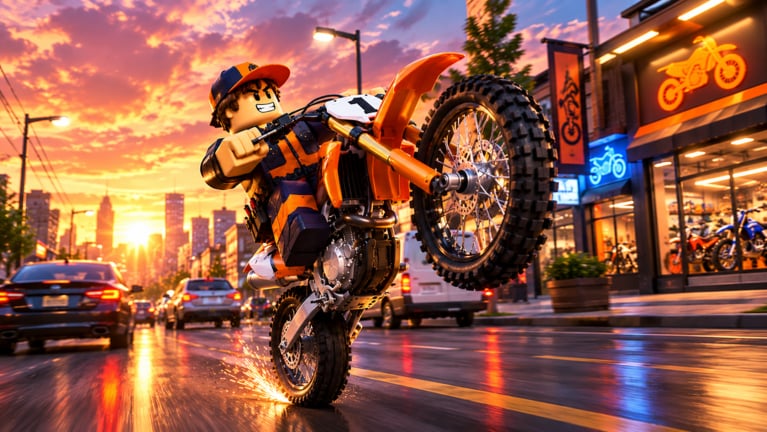
Parts are the raw fuel of Make Bikes!. Crates feed your bay; engines, frames, wheels, and cosmetics turn into painted bikes you sell or ride. This page ranks common part goals rather than pretending one unchanging spreadsheet of every named drop. Make it Interactive can retune numbers, so treat tiers as priorities for early and mid workshop play. For how those parts assemble into full bikes, jump to Best Builds and the build bikes guide. Crate opening habits live on crates and parts.
Evaluation framework (use this after every patch)
When a part lands, score it on four axes before you lock a tier in your head:
- Sell value contribution — Does installing this part raise what buyers pay after paint? If yes, it climbs for tycoon sessions. Details on cash flow sit in make money.
- Ride performance — Does it help acceleration, top speed feel, grip, or trick stability on Highway, Sand Dunes, Timber Ridge, or MX Track? Ride cash from wheelies and combos can justify a part that is only average on a sell sheet—see riding and tricks.
- Crate luck and opportunity cost — How hard is it to replace? A slightly better common that drops often can beat a flashy rare you see once a week if your bay needs volume.
- Stage fit — Early workshop wants complete bikes now. Mid workshop can hold mutated pieces for stronger flips and showcase rides. Late workshop and rebirth goals (rebirth workshop) may keep trophy parts even when they are not the fastest sell.
If a patch changes payouts or drop rates, re-run these four questions instead of copying an old screenshot.
Engines
Engines are usually the first place players look, and for good reason: power changes both how a bike feels on the maps and how impressive a finished product looks to buyers.
S-tier engine goals
- Highest clear power tier you can actually mount on a finished frame without stalling the sell loop. If the engine turns a bike from “okay” to “must sell / must ride,” it is S for that stage.
- Mutated engines that visibly outperform their base version on the axes above. Mutated does not automatically mean S—only when the mutation improves sell value or the ride stats you use.
A-tier engine goals
- Strong non-mutated engines that finish mid-tier bikes quickly.
- Engines that shine on one map role (for example Highway pulls) even if they are not the absolute top sell part.
B-tier engine goals
- Common crate engines that keep production moving while you wait for better opens.
- Slight upgrades over starter power that still complete early goals from getting started.
C-tier engine goals
- Bare starter or leftover engines that only exist to teach the bay loop. Replace them as soon as crates allow.
Honest note: Do not scrap a finished sellable bike just because a prettier engine appeared mid-build. Park the upgrade for the next chassis unless the power jump is obviously worth the delay.
Frames
Frames decide what you can hang on the bike and how stable the finished machine feels. A great engine on a weak frame is still a weak product.
S-tier frame goals
- Frames that unlock or comfortably support your best available engine and wheel package.
- Mutated frames that improve handling or sell appeal enough to justify saving them for paint-flip or showcase builds.
A-tier frame goals
- Sturdy mid crates that accept common high-value parts without awkward gaps in the bay workflow.
- Frames that feel planted for trick landings on MX Track or Timber Ridge lines.
B-tier frame goals
- Workhorse frames for continuous early and mid sells.
- Extra frames kept as backups so staff and stations stay busy.
C-tier frame goals
- Tutorial frames you outgrow after the first handful of sales. Keep one only if you still need a disposable ride for practice combos.
Wheels
Wheels are easy to underrate. Grip and roll feel change Sand Dunes traction, Highway stability in wheelies, and how cleanly you land after tricks.
S-tier wheel goals
- Sets that clearly improve the maps you ride most while still supporting strong sell prices.
- Mutated wheels that fix a weakness (slippery dunes, sketchy landings) better than a raw power upgrade would.
A-tier wheel goals
- Balanced all-rounders for mixed sessions (sell a bike, then ride another).
- Wheels that match a specialist build role from Best Builds.
B-tier wheel goals
- Commons that complete a bike so it can leave the bay today.
- Cosmetic-leaning sets when you are practicing paint value more than map time.
C-tier wheel goals
- Starter rubber you keep only until the first decent crate upgrade.
Mutated and rare parts
Rare and mutated parts are a headline feature of Make Bikes crates. They are exciting—and they are where players burn the most cash by over-holding.
When mutated parts are S or A
- The mutation improves a metric you monetize: higher sell payout after paint, or better ride/combo income on maps you actually visit.
- You already have stations, staff, and a cash buffer so holding the part does not stop the workshop.
- You have a plan: paint-flip seller, trick specialist, or late showcase—not “maybe someday.”
When mutated parts drop to B or C for you
- You are still clearing starter goals and need volume sales more than trophy inventory.
- The mutation is mostly visual and does not move sell or ride numbers you care about.
- You lack the matching frame or engine, so the part sits unused while the bay idles.
Free crate codes such as FIRSTGEAR help you sample the loot table without draining savings. Still open with intent: identify engines, frames, and wheels against the framework above.
Early workshop part priority (practical order)
- Anything that completes a bike for a starter-goal payout.
- Engine upgrades that shorten ride time between sells or improve buyer appeal.
- Frame upgrades that accept those engines cleanly.
- Wheels that stop you from crashing value on practice rides.
- Mutated holds only if cash flow is already stable.
Mid workshop part priority (practical order)
- Mutated or rare engines and frames that raise sell tiers.
- Wheels matched to your favorite map.
- Duplicate high parts: one for a sell bike, one for a ride bike.
- Cosmetic and paint-friendly packages that support flip margins.
- Trophy mutated pieces reserved for rebirth showcase looks.
Inventory discipline
- Do not treat every rare tag as sacred. Dead inventory is unpaid rent on your lot.
- Do keep a small reserve of B-tier commons so production never stalls between lucky opens.
- Do re-check updates after balance notes before you invest a huge stack of cash into one part family.
- Do compare leaderboard bikes on your players server for inspiration, then verify with your own sell and ride tests.
Quick cross-links
- Hub rankings overview: Tier List Hub
- Full bike roles: Best Builds
- Loop guides: make money, build bikes, crates and parts
- Map skills: riding and tricks
- Official play page and group pointers: Official Links
Rank the part in front of you with sell value, ride performance, crate replaceability, and stage fit. That habit stays correct even when the patch notes move the numbers.
Frequently Asked Questions
Quick answers for Make Bikes players.
What is the best part type to upgrade first in Make Bikes?
Usually engines for power and buyer appeal, then frames that can carry those engines, then wheels matched to the maps you ride. Completing a sellable bike always beats leaving a rare part unused.
Are mutated parts always better than commons?
No. Mutated parts are high priority only when they improve sell payout or the ride stats you use, and when your workshop can afford to hold them. Early on, common parts that finish bikes often win.
Why avoid exact stat tables on this tier list?
Patches can change numbers and crate odds. A four-axis framework—sell value, ride performance, replaceability, and stage fit—stays useful after updates.
How do codes affect part ranking?
Codes like FIRSTGEAR can grant free crates so you sample better engines, frames, and wheels sooner. They do not change the evaluation rules; they only speed up how often you apply them.