Make Bikes Best Builds Tier List
Four roles that cover cash, flips, map tricks, and rebirth showcase bikes.
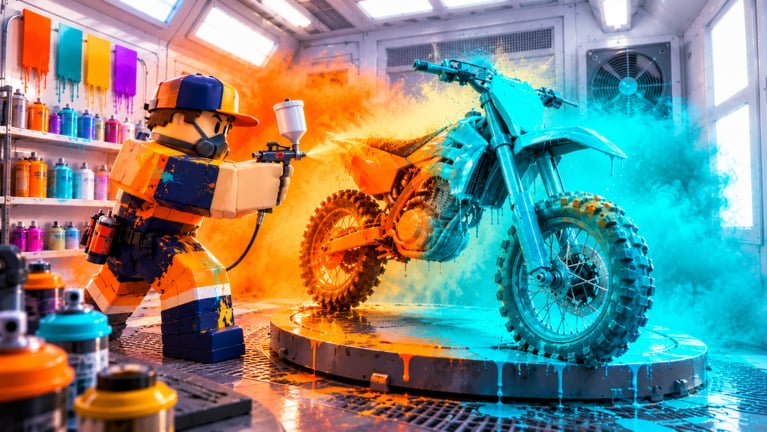
A build in Make Bikes! is more than a pile of rare tags. It is a finished bike with a job: earn cash, practice paint margins, farm trick combos, or show off a rebirth workshop look. This tier list ranks build roles for early, mid, and late workshop play. Pair it with Best Parts for component choices, build bikes for bay workflow, and make money for when to sell versus when to ride.
Exact part combinations will shift after patches from Make it Interactive. The roles below stay stable because they match how the game is designed: crates to bay to paint to sell, plus riding Highway, Sand Dunes, Timber Ridge, and the MX Track for wheelies, tricks, and combos.
How build tiers work here
We still use S / A / B / C, but for roles at a stage, not forever-named recipes.
- S-tier role — The build you should be running most of the time at that stage.
- A-tier role — Excellent secondary bike once the S role is funded.
- B-tier role — Useful side project or training bike.
- C-tier role — Learning scaffold; replace once goals and stations advance.
If a viral screenshot conflicts with your cash flow, trust your sell log and combo income over the screenshot.
Role 1 — Early cash bike (S for new workshops)
Goal: Convert crates into completed, painted sales as fast as possible while clearing starter goals.
What it looks like
- Common or lightly upgraded engine that still finishes the bike today.
- Frame that accepts that engine without waiting on a perfect mutated drop.
- Basic wheels—good enough to move the bike to the buyer loop and take short practice rides.
- Simple paint that completes the product; do not spiral on cosmetics before cash is stable.
Why it ranks S early
Starter goals pay you for progress. An empty bay waiting on a dream crate earns nothing. The early cash bike exists to keep stations busy, teach the paint-and-sell rhythm, and fund the next crate order. Redeem codes such as FIRSTGEAR when available so the first few engines and frames arrive faster, then follow getting started goals instead of inventing a harder loop.
Common mistakes
- Stripping a nearly finished bike because a slightly better engine appeared.
- Skipping paint entirely when paint is part of the sell value chain.
- Riding for fun so long that staff and stations sit idle with no product to sell.
Graduate when: You can complete sells without thinking, and you have a small cash buffer for mid-tier crates and a second bike role.
Role 2 — Mid paint-flip build (S for mid workshop cash)
Goal: Maximize margin per bike by pairing better parts with deliberate paint and faster bay turnover.
What it looks like
- Mid or rare engine that buyers clearly pay more for.
- Frame that showcases those parts cleanly.
- Wheels that do not drag the sell appeal down.
- Paint choices aimed at flip value, not only personal taste.
- Optional mutated accent parts when they raise payout enough to justify hold time—see crates and parts.
Why it ranks S mid-game
Once staff help and stations have expanded the shop into more rooms, volume alone is not enough. Paint-flip builds are how you climb cash for rebirth looks and higher crate tiers without relying only on map grinding. This is the build that funds rebirth workshop progress toward better building skins (from timber shed vibes toward late flex looks such as Godspeed Gold) without wiping your operating cash.
A-tier variant: Keep a second flip chassis ready so one bike can sell while the next is painted.
B-tier trap: Over-investing cosmetics on a weak mechanical base. Paint multiplies a good bike; it rarely rescues a hollow one.
Role 3 — Ride / trick specialist (S for map income, A for pure tycoon players)
Goal: Earn from wheelies, tricks, and combo chains on the maps, then return to the lot richer—or simply enjoy the skill loop without wrecking your economy.
What it looks like
- Engine tuned for the map you main (Highway speed and wheelie hold, Sand Dunes traction, Timber Ridge flow, MX Track landings).
- Frame and wheels that forgive mistakes during combos.
- Parts chosen with riding and tricks in mind more than maximum shelf price.
- Light enough customization that you are not afraid to crash while learning lines.
Tier placement
- S if a big share of your income or fun comes from map sessions.
- A if you mostly sell but want one dedicated ride bike so you stop risking the flip chassis.
- B if you only ride between crate timers.
Tips that keep this role profitable
- Separate “sell bike” and “ride bike” in your head. Crashing a flip build for a combo attempt is expensive tuition.
- Practice combos on the specialist, then spend the cash on crates and stations—not vanity parts you will not mount.
- Watch how other players in an 8-person server line the same map; ideas transfer even when you do not trade parts. More on server habits in players.
Role 4 — Late showcase build (S for flex / rebirth pride, A for economy)
Goal: Display the best mutated and rare package you own, often alongside a rebuilt workshop look after rebirth.
What it looks like
- Top engine, frame, and wheel package you have earned, including mutated pieces that passed the Best Parts framework.
- Paint and tuning chosen to match the building aesthetic you unlocked.
- Not necessarily the fastest cash-per-minute bike—this is proof of progression.
When it is S versus A
Showcase is S when you have already secured operating cash and staff income. It is A (or even B) if building it empties the account you need for crates. A beautiful bike in a quiet, underfunded shop is a trophy with a leak.
Link to rebirth
Rebirth changes how your workshop looks as you grow from a small lot toward premium skins. Plan showcase builds after you understand the cash reset or cost structure on rebirth workshop. Flex harder when the shop can still produce paint-flip bikes in the background.
Suggested progression path
- Hours 0–early: Early cash bike only (S). Finish goals. Use free crates from codes.
- Early–mid: Add a paint-flip build (new S). Keep one humble cash bike as B backup.
- Mid: Spin up a ride/trick specialist (S or A depending on your income mix).
- Late: Assemble a showcase bike (S for pride, A for wallet) while flips keep funding crates and stations.
This path mirrors the official loop: order crates, build at your bay, paint, sell, hire staff, ride maps, climb leaderboards, and rebirth the building look.
Build quality checklist before you leave the bay
- Is every critical slot filled (engine, frame, wheels) so the bike is actually complete?
- Did paint get applied with sell or showcase intent?
- Does this bike have a single primary job (cash, flip, tricks, showcase)?
- If it fails that job, which part from Best Parts is the bottleneck?
- After the next update, will you re-test sell price and ride feel before copying the same recipe?
Related reading
- Tier List Hub — S–C rules for early versus mid workshop
- Best Parts — engines, frames, wheels, mutated evaluation
- Make money — sell versus ride cash decisions
- Build bikes — bay assembly habits
- Official Links — play on Roblox and group free-gift notes
- Scripts — know the risks if you explore that topic at all
Pick the role that matches your workshop stage, fund it with parts that survive the evaluation framework, and only then chase the next flex bike. That is how Make Bikes builds stay ranked useful after the meta shifts.
Frequently Asked Questions
Quick answers for Make Bikes players.
What is the best first build in Make Bikes?
An early cash bike: complete common parts, basic paint, and fast sells while you clear starter goals. Waiting on perfect mutated parts slows the whole workshop.
Should I use the same bike for selling and tricks?
Ideally no once you can afford two roles. Keep a paint-flip seller safe and use a ride/trick specialist for Highway, Sand Dunes, Timber Ridge, and MX Track combos.
When should I build a showcase bike?
After operating cash, crates, and staff are stable—often alongside rebirth workshop looks. Showcase is for proving progress, not for replacing your money loop.
Do build rankings change after updates?
Named recipes can. The four roles—early cash, paint-flip, trick specialist, and late showcase—stay useful; re-test parts and payouts after each major update.